
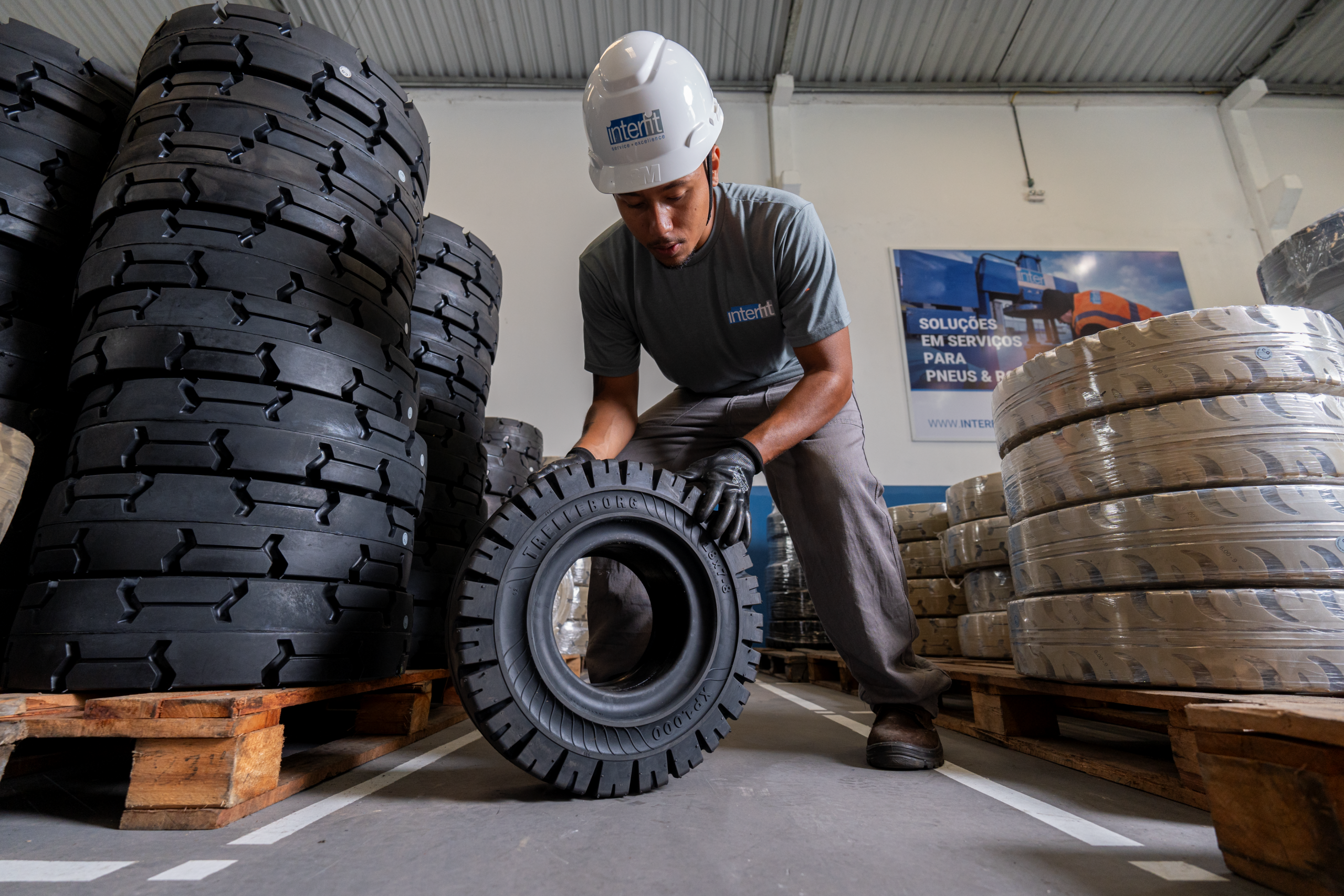
In material handling operations, forklift performance depends on the reliability of every component—but tires remain one of the most critical and often overlooked elements.
Forklift tires are directly responsible for load stability, traction and handling precision. Worn, damaged or improperly selected tires can significantly affect the truck’s center of gravity and braking performance, increasing the risk of instability, load shifting or operator incidents. In high-intensity environments, even minor degradation can translate into measurable safety concerns.
From an operational standpoint, tire condition also influences energy efficiency and equipment wear. Increased rolling resistance—caused by flat-spotted, unevenly worn or underperforming tires—leads to higher energy consumption and can accelerate strain on drivetrain components. Over time, this results in reduced efficiency and higher maintenance costs.
Unplanned downtime is another critical factor. Tire failure or performance loss can interrupt workflows unexpectedly, impacting productivity and potentially causing delays across the entire operation.
For these reasons, a proactive tire management strategy is essential. This includes regular visual inspections, wear monitoring, timely replacement and selecting the appropriate tire type based on load capacity, floor conditions and application requirements.
At Interfit, we apply a structured, field-driven approach that combines technical expertise, preventive maintenance and rapid on-site intervention. The goal is simple: ensure maximum uptime, enhance safety standards and support efficient, uninterrupted operations in even the most demanding environments.